Create organizations and suborganizations
Set up organizations and suborganizations in SecureAuth to create isolated customer environments with delegated administration. Organizations let you represent multiple business customers within a single workspace while maintaining baseline security policies.
💡 Why this matters
Create isolated environments for each customer so they manage their own users while you maintain control over baseline security policies.
Business structure options
Choose your organizational structure based on your business needs:
| Structure Type | When to Use | Example |
|---|---|---|
| Flat organizations | Simple customer separation | Each customer = one organization |
| Parent-child hierarchy | Complex business relationships | Holding company with subsidiaries |
| Workspace grouping | Departmental separation | HR, Finance, Operations workspaces |
Create an organization
-
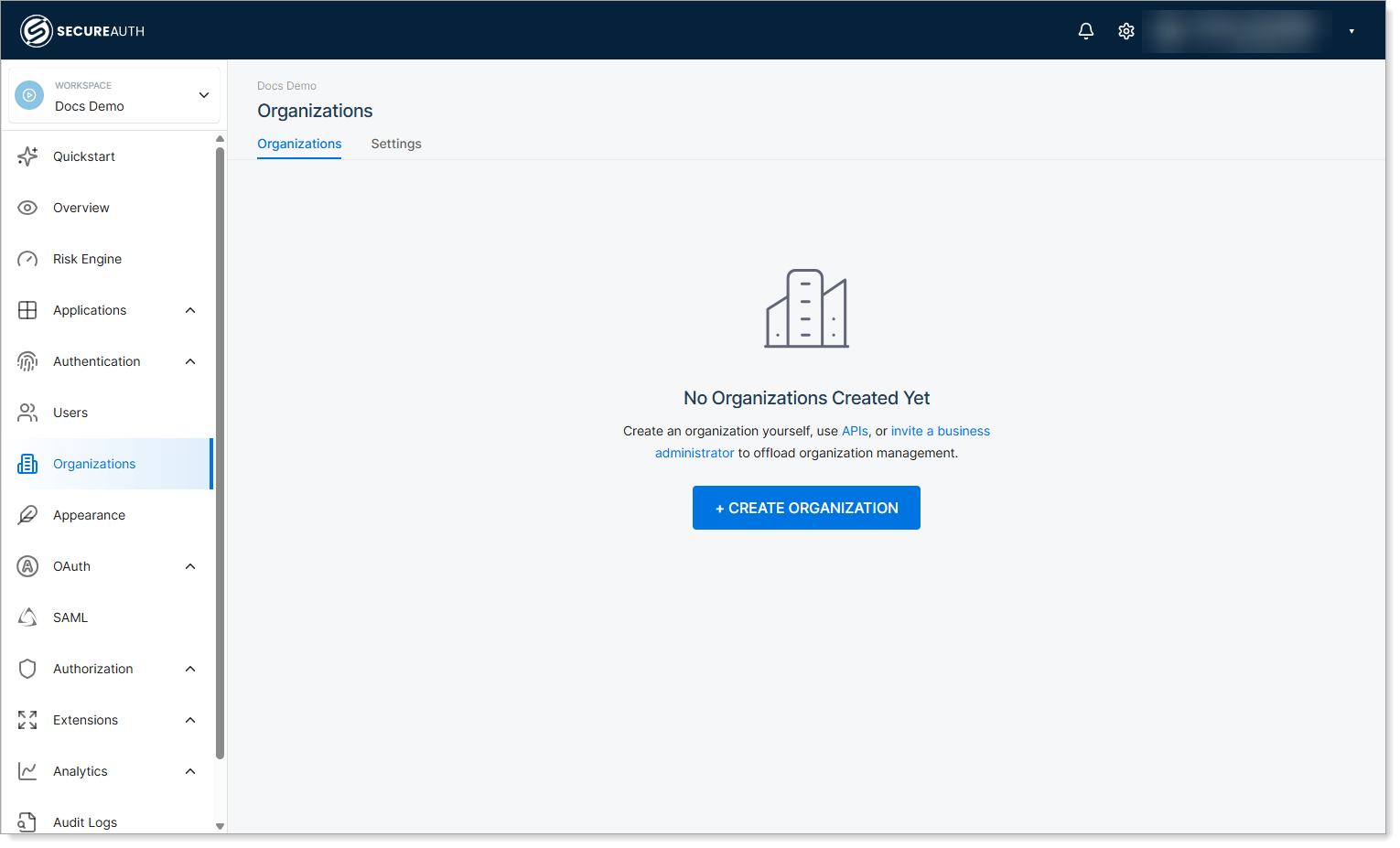
Go to Organizations and click Create Organization.
-
Configure the organization details (Step 1/2 on the UI):
Security noteOrganization IDs are permanent and used in API calls - choose descriptive, consistent naming conventions.
Setting Value Notes Name [Business name] User-friendly display name Organization ID [unique-identifier] Cannot be changed after creation Email domains [company-domains] Enables intelligent identity provider discovery 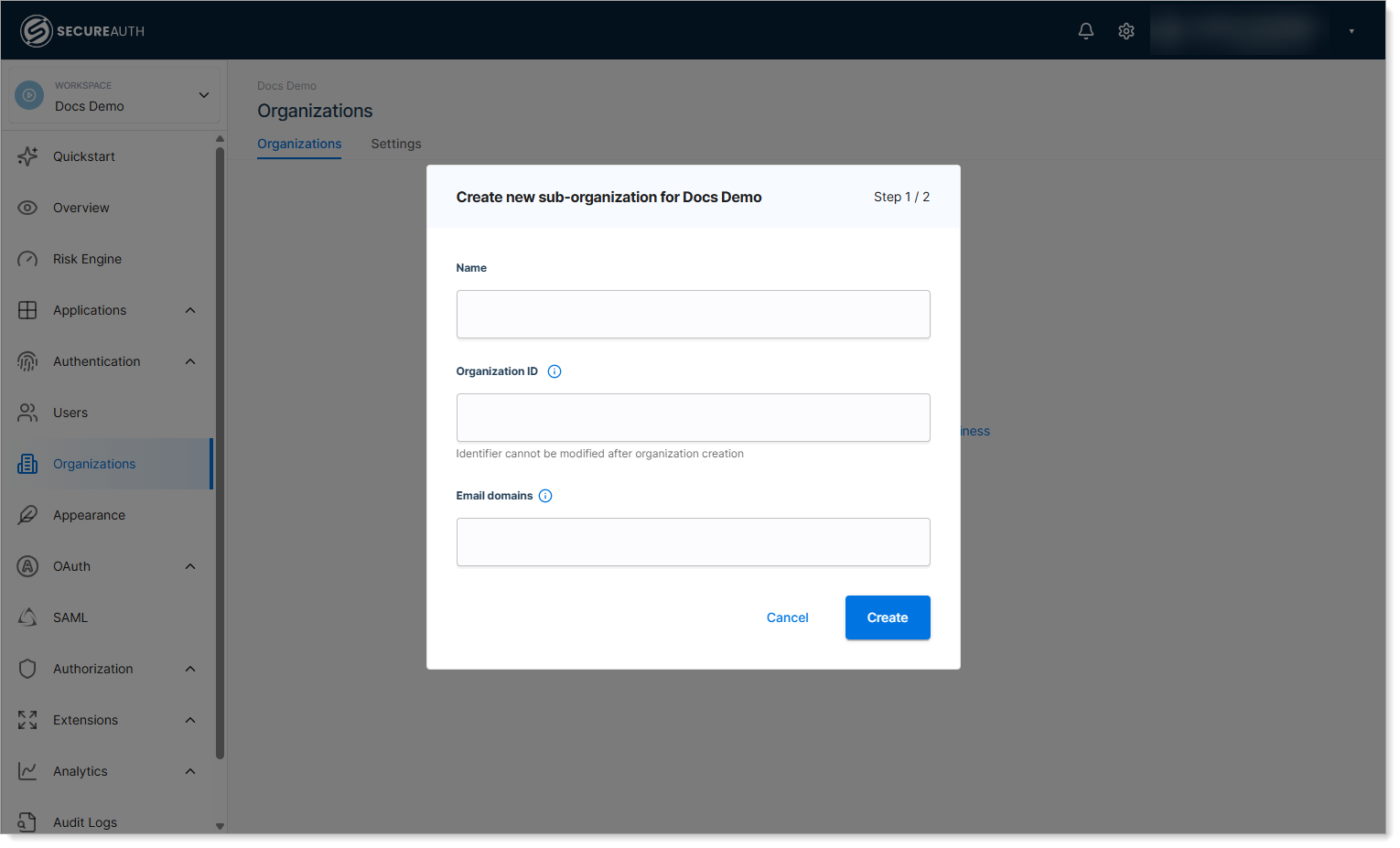
-
Click Create to continue to Step 2.
-
Optionally create an organization admin (Step 2/2 on the UI):
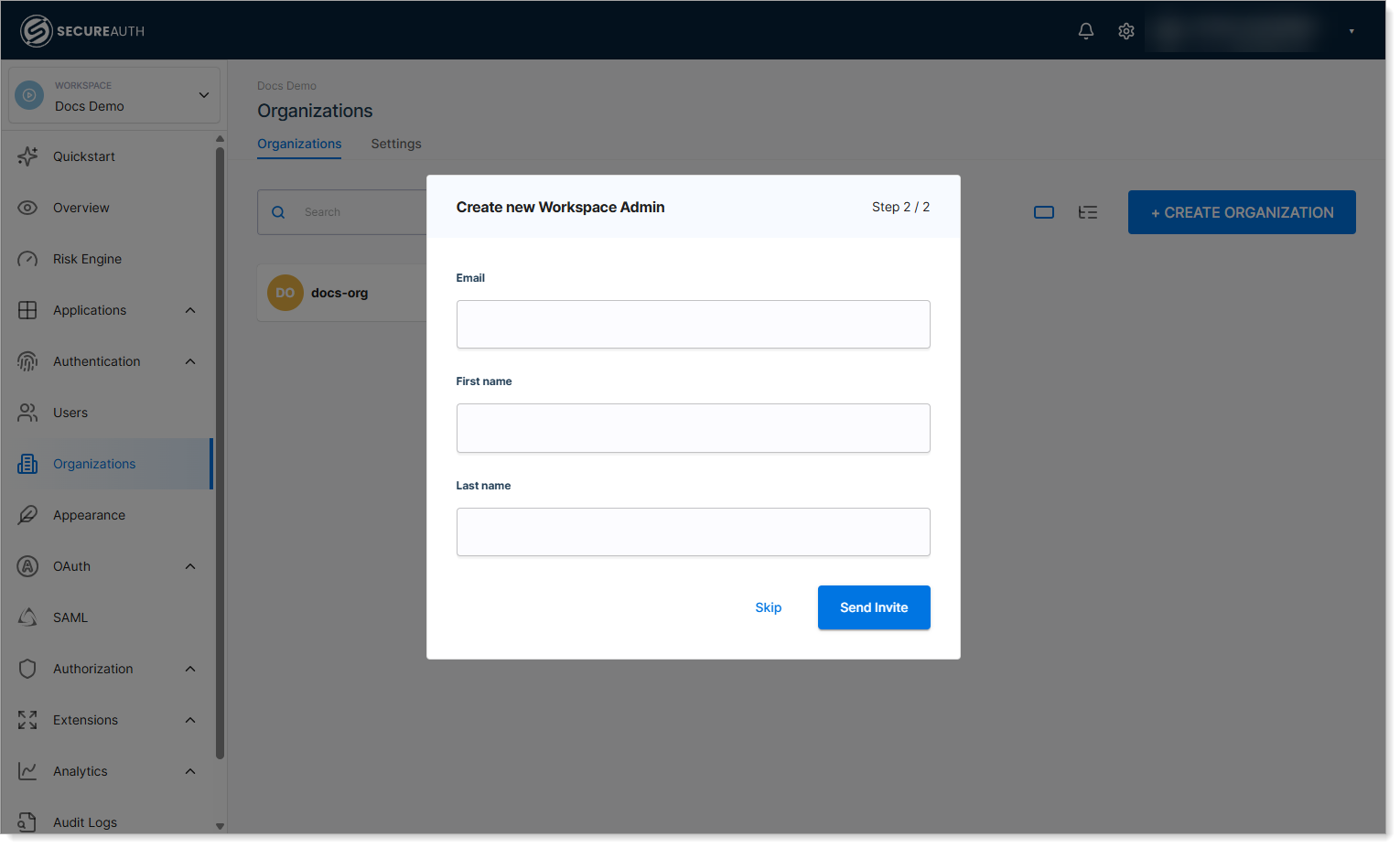
Setting Value Notes Email [admin-email] Admin user's email address First name [Admin first name] Administrator's first name Last name [Admin last name] Administrator's last name -
Choose Send Invite to create the admin user, or Skip to complete organization creation.
Verify: New organization appears in the Organizations list with "Active" status
Create suborganizations
Create suborganizations to represent departments, locations, or divisions within a parent organization.
-
Go to the parent organization where you want to add a suborganization.
-
Select Suborganizations > Create Organization.
-
Configure the suborganization details (Step 1/2 on the UI):
Security noteOrganization IDs are permanent and used in API calls - choose descriptive, consistent naming conventions.
Setting Value Notes Name [Suborganization name] User-friendly display name Organization ID [unique-identifier] Cannot be changed after creation Email domains [company-domains] Enables intelligent identity provider discovery -
Click Create to continue.
-
Optionally create an organization admin (same process as organization creation - Step 2/2 on the UI).
-
Choose Send Invite or Skip to complete suborganization creation.
Verify: Suborganization appears under the parent organization in the hierarchy view
Organization features
Email domain intelligence
When users enter email addresses during authentication, SecureAuth automatically displays authentication options for organizations with matching email domains.
Example: User with user@acmecorp.com sees ACME Corp's SSO options when acmecorp.com is configured for that organization.
Organization templates
Use an organization template during creation to automatically copy configurations (authentication settings, policies, branding) from a template organization. This is useful when creating multiple similar organizations.
Use case: Create multiple similar organizations (like franchise locations) with consistent security policies.
Learn more: Create organization templates.
Organization administrator creation
The optional Step 2 allows you to immediately create an administrator for the new organization:
- Send Invite – Creates user account and sends email invitation to set password
- Skip – Organization created without dedicated administrator (can be added later)
See also
- Organizations overview - Key concepts and benefits of organizations
- Manage organizations - Edit hierarchies and configure templates
- Configure organization details - Define custom attributes for organizations
- Building B2B SaaS platforms with Organizations - Real-world B2B use case example
- Understanding Workspaces and Organizations - Technical reference on workspace vs. organization concepts