How resources work
Add catalog and custom MCP servers to your gateway
Resources are the MCP servers that give agents something to do — without one connected, there are no tools to call, allow, or deny. Add resources from the catalog for common services, or connect any custom MCP server your organization runs.
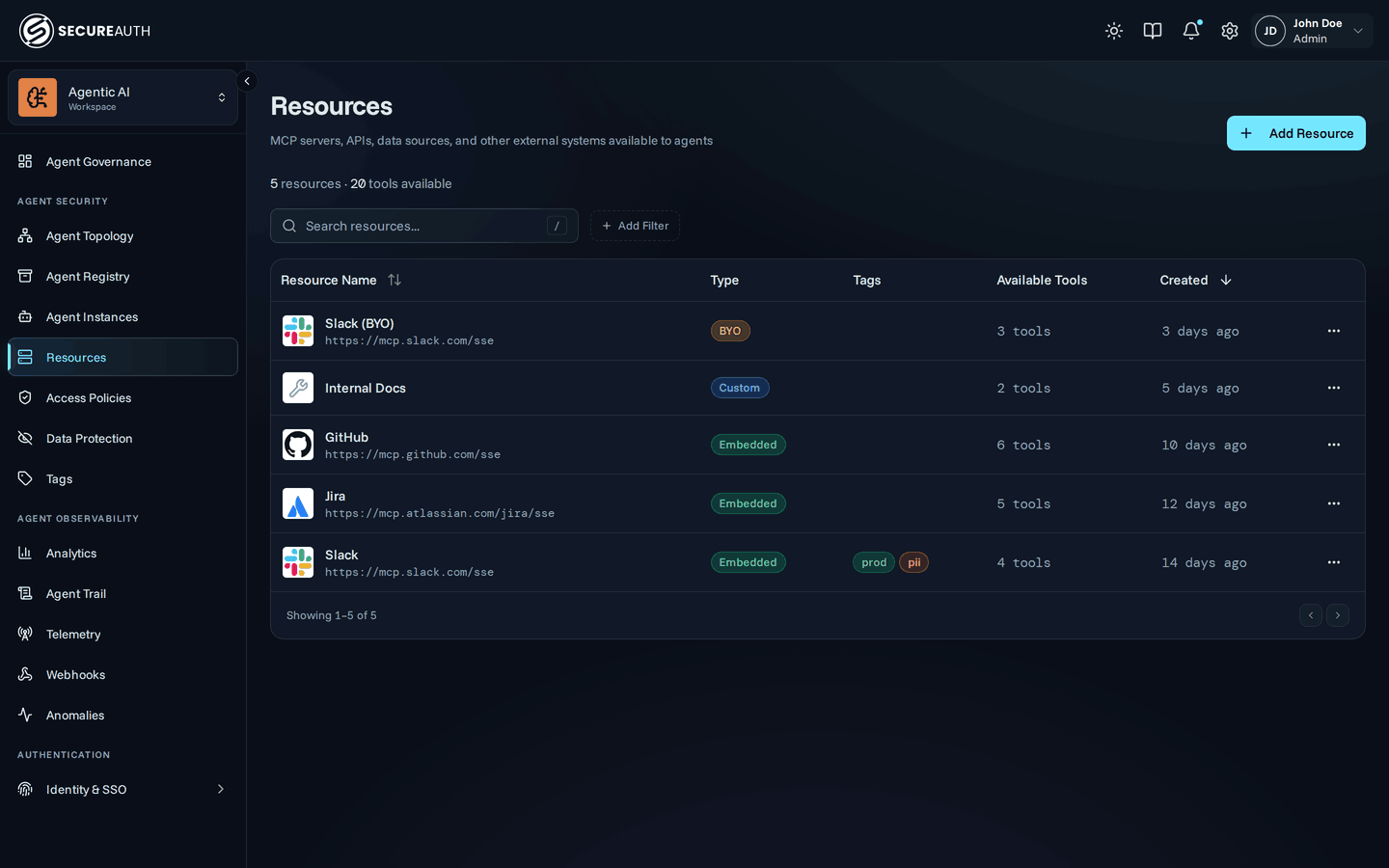
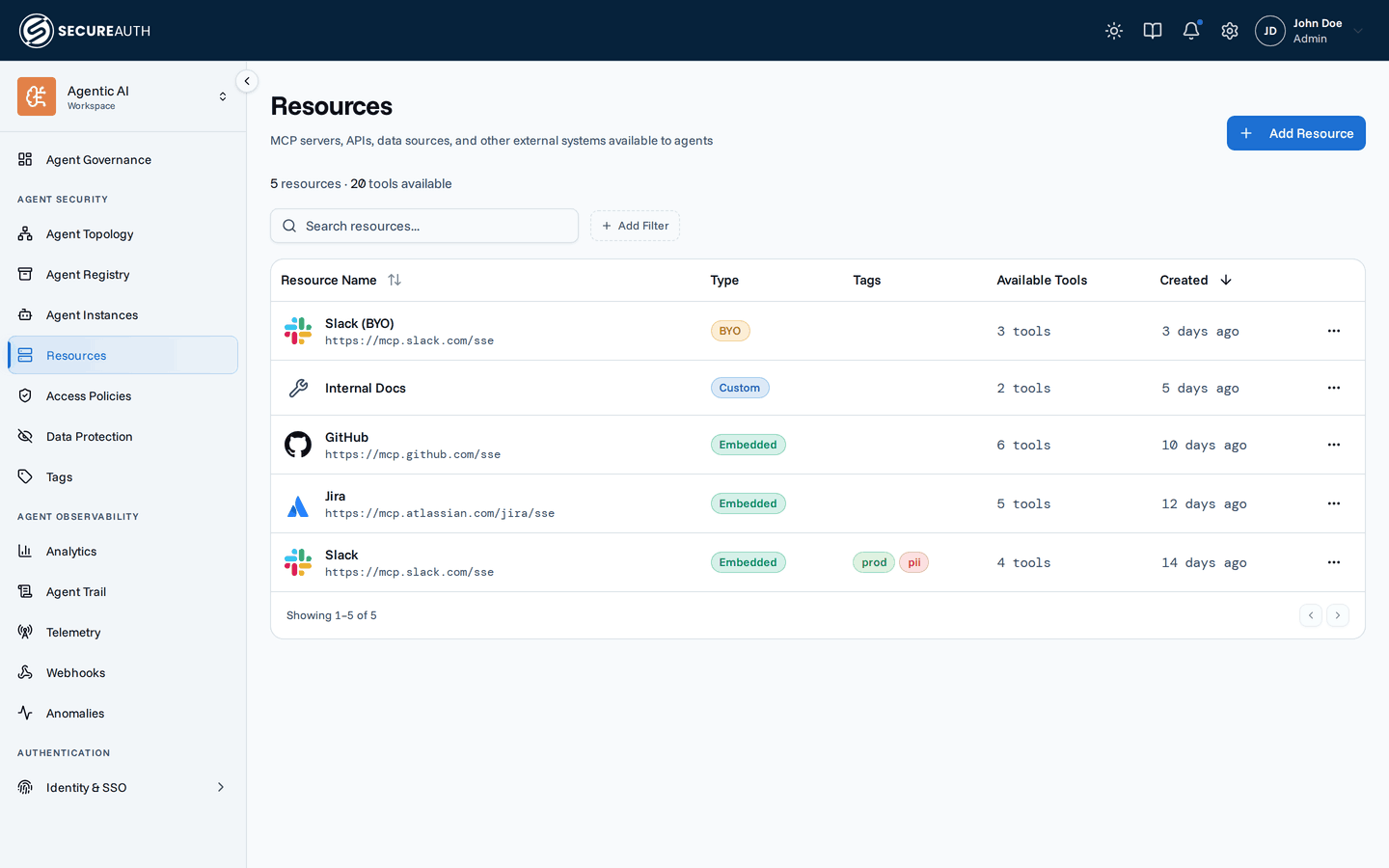
From the catalog
The catalog includes pre-configured resources that work out of the box:
- Navigate to Tools & Services in the dashboard
- Click Add Resource to open the catalog
- Find a resource by search or by browsing a category, then click it to open its page
- If it supports more than one way to authenticate, pick Use SecureAuth's app (the quickest option) or Bring your own app (paste your own OAuth client ID and secret — the form shows a redirect URI to register with the provider, then click Add). See Credential modes for the differences.
- Resources that support only one option skip the choice: most show that single card and install when you click it, while bring-your-own-only resources take you straight to the credentials form
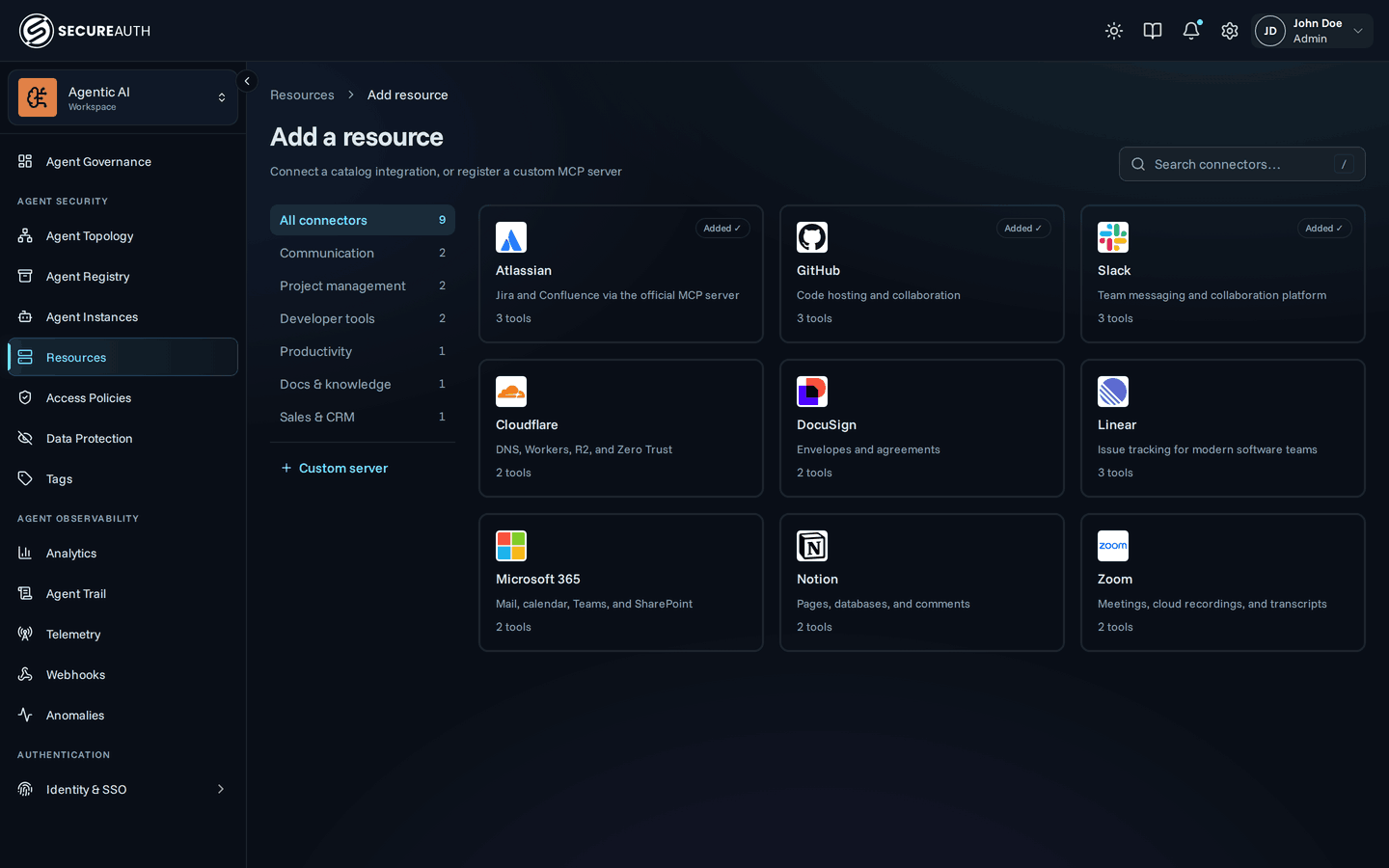
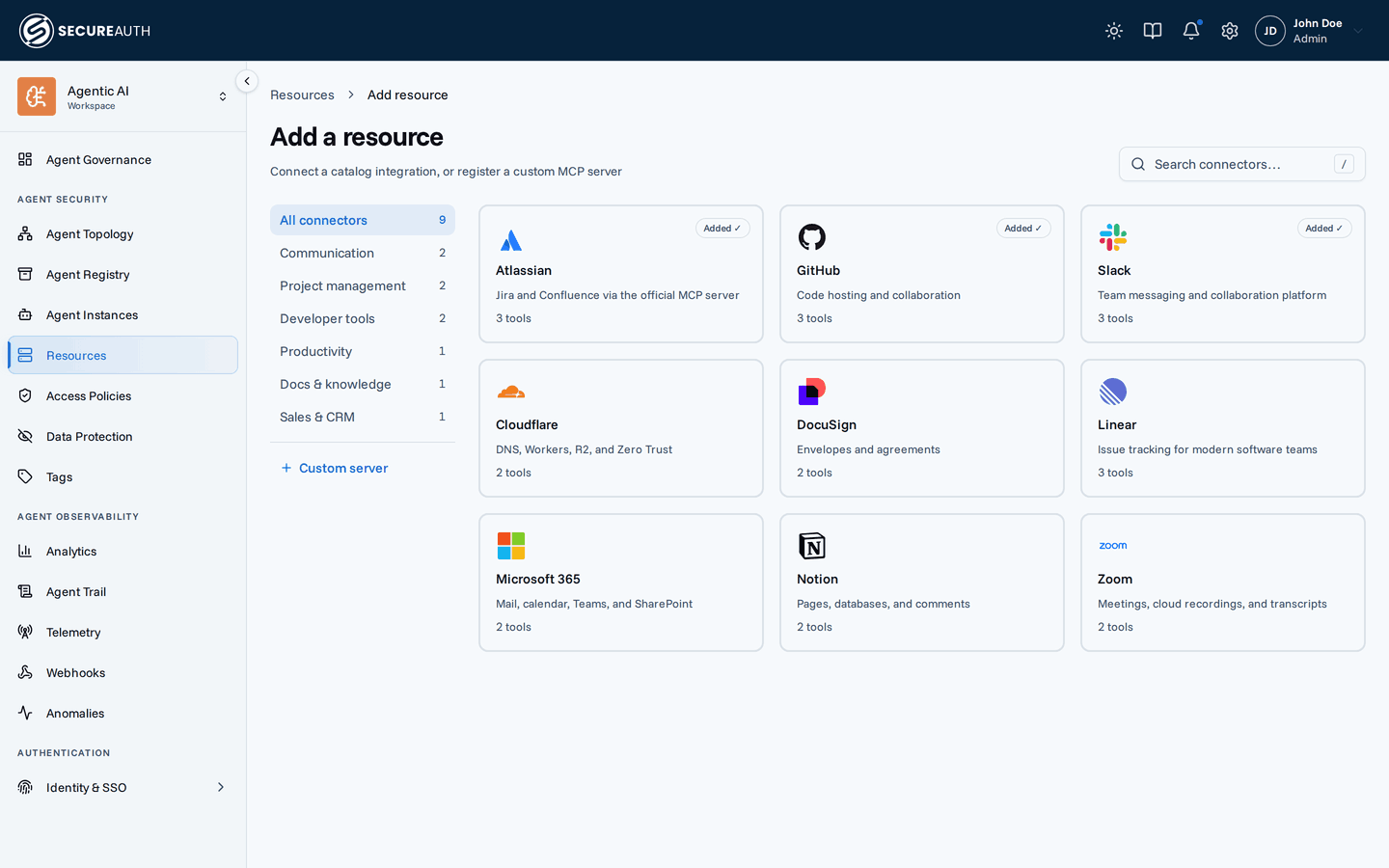
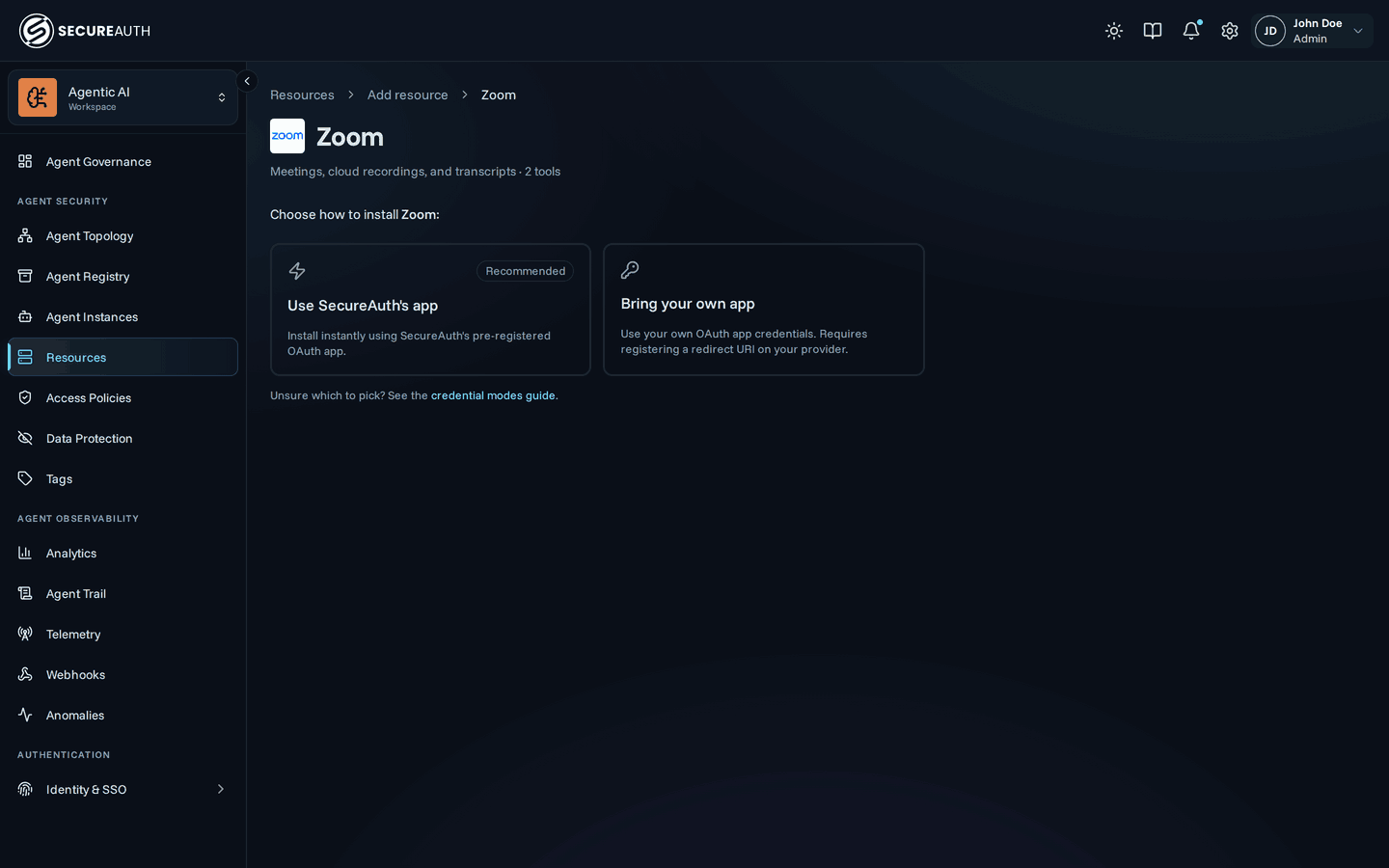
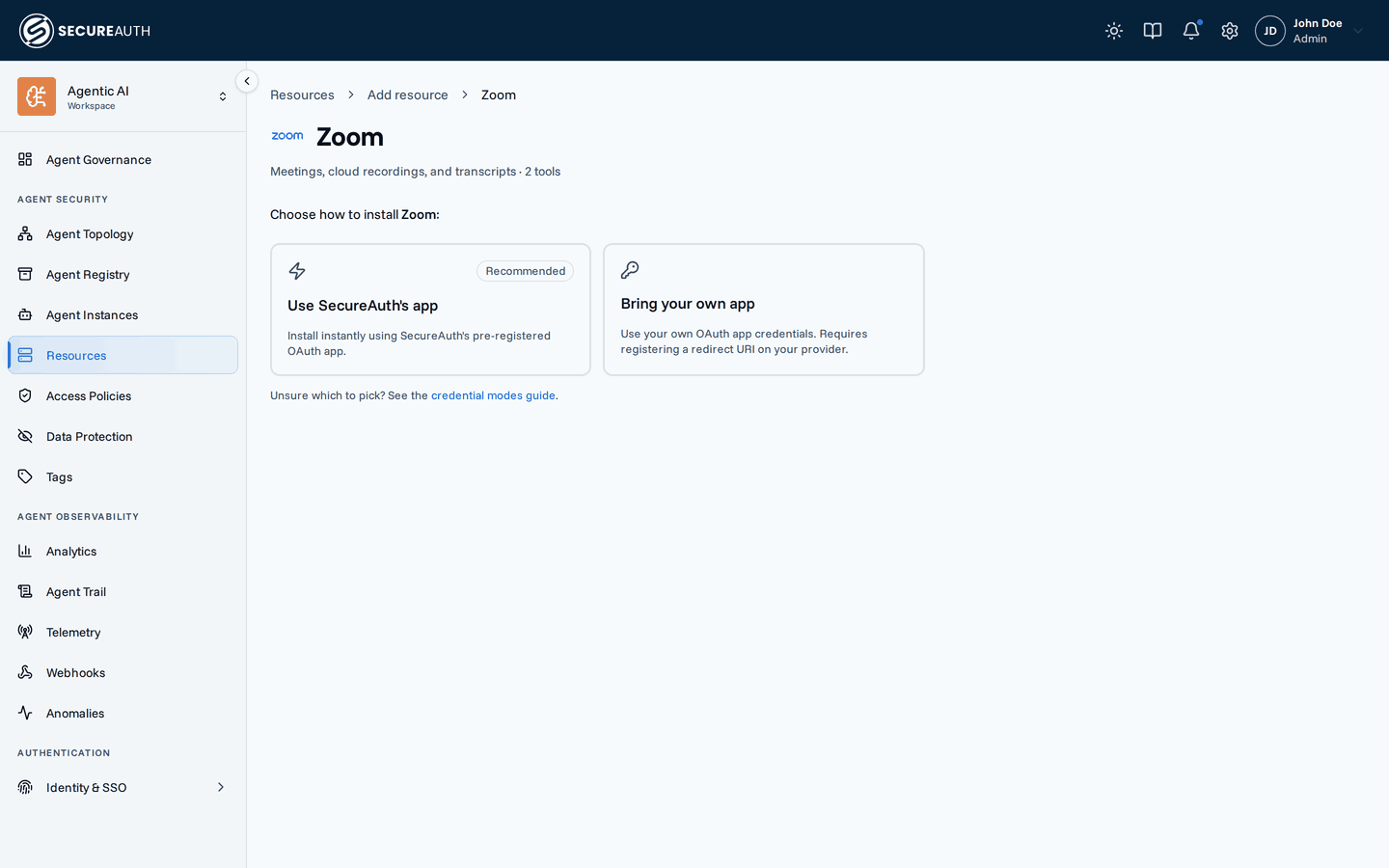
Available tools are discovered automatically. Users will be prompted to connect their accounts via OAuth when they first use the resource.
Custom resources
You can add any MCP server not in the catalog:
- Navigate to Tools & Services, click Add Resource, then + Custom server
- Enter a display name, a slug, and the server URL for the MCP server. The slug is the short identifier used in policies (
mcp.slug == "…") and when scoping a connection to one MCP. - Choose the authentication type:
- None – no authentication required
- OAuth2 – defaults to Automatic (DCR), which registers a client with the provider for you and needs no credentials. Switch to Use existing client credentials to supply your own client ID, secret, and scopes, plus either an OIDC issuer URL or manual endpoint URLs (an authorize URL as well as a token URL, for the default authorization-code grant)
- API Key – add custom headers sent with every request
- Click Add
The gateway connects to the server and discovers available tools automatically.
Custom servers stay editable: their detail page has an Edit button for fixing a typo'd URL or changing authentication in place. Catalog installs don't — apart from rotating BYO credentials, changing one means deleting it and adding it again.
Token endpoint authentication
By default the gateway auto-detects how to send the OAuth2 client credentials to the provider's token endpoint. Some providers only accept credentials in the POST body and reject HTTP Basic authentication — combined with single-use authorization codes, auto-detection can make the connect flow fail.
For dynamically registered (DCR) servers this is fully automatic: the gateway uses the method the provider reports during registration, and the setting cannot be overridden.
When you bring your own client — a custom server with existing credentials, or
a catalog integration in BYO mode — set Token Endpoint Authentication
explicitly if the provider is strict: client_secret_basic (client secret in
the HTTP Basic header), client_secret_post (client secret in the POST body),
or none (public client).
Resource details
Click any resource in the list to see its detail page:
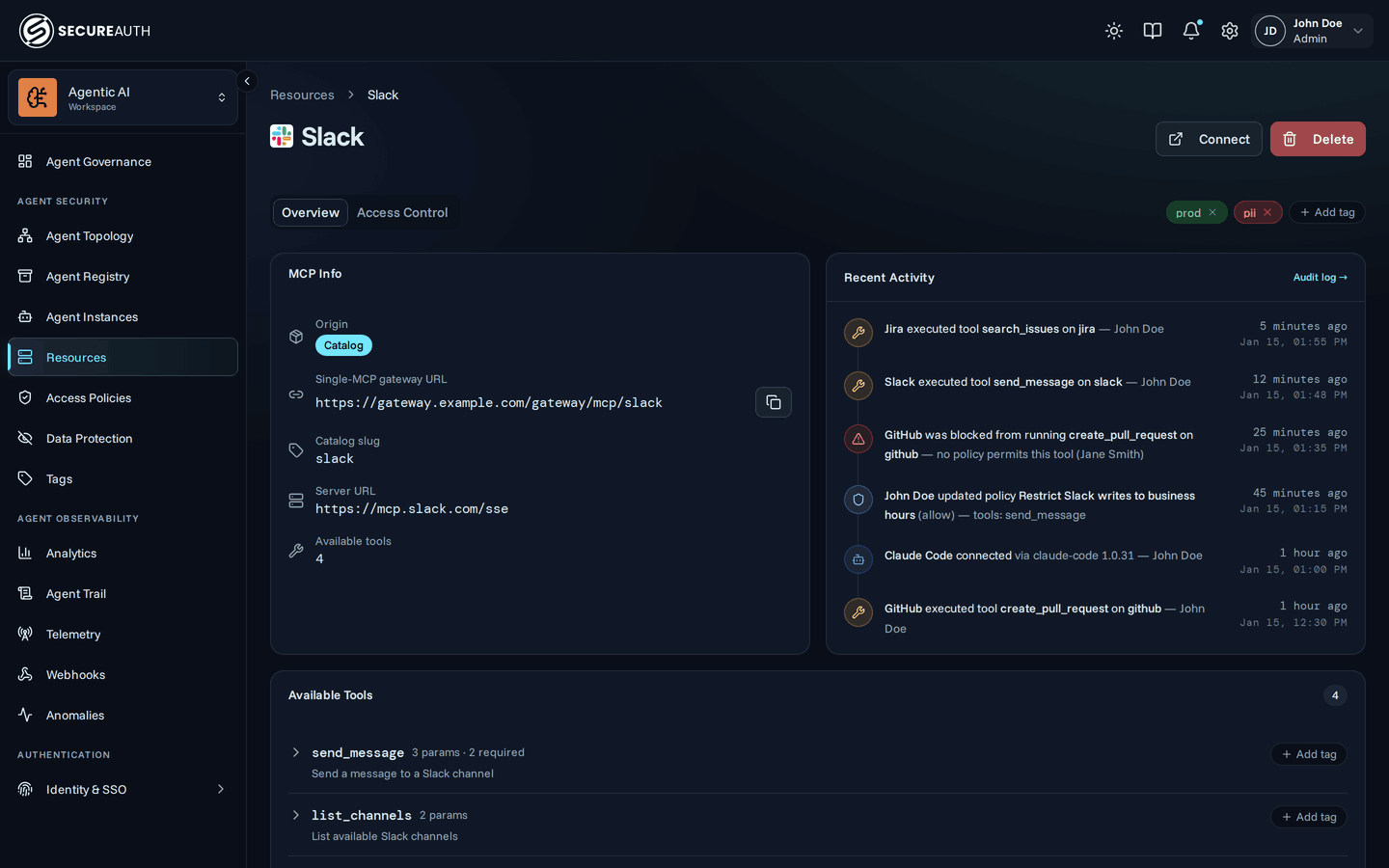
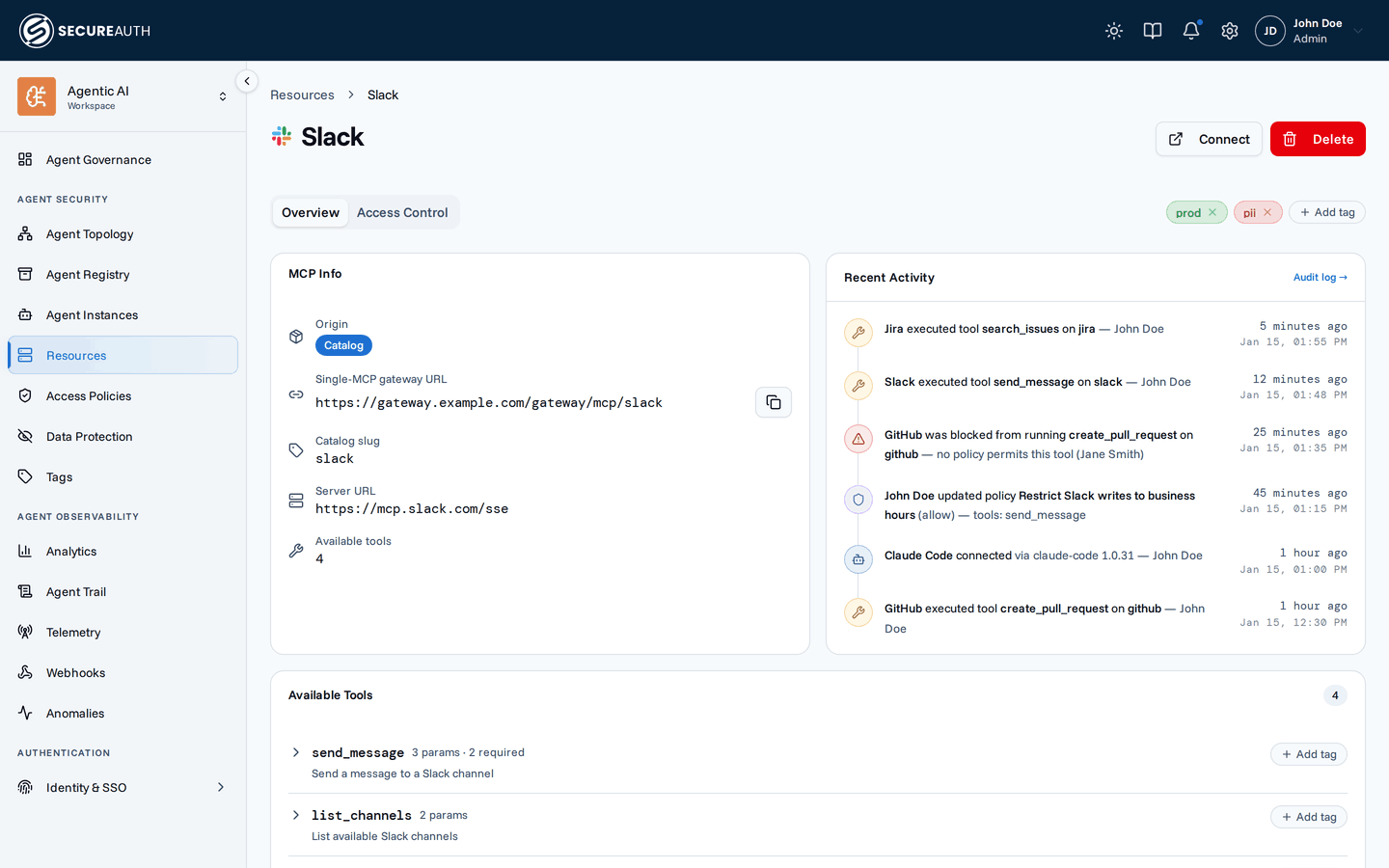
- Available tools – every tool the MCP server exposes, with descriptions. For a resource that fans out to several upstream servers (Microsoft 365's Mail, Calendar, Teams, and so on), tools are grouped by upstream, collapsed by default
- MCP Info – server URL, origin (catalog or custom), and — for custom servers — the authentication type
- Credentials – for resources installed in bring-your-own mode, a card to rotate the OAuth client ID and secret in place (details)
- Recent activity – audit events related to this resource
Next steps
- Policies – write rules that decide which agents can use these tools.
- Credential modes – how the gateway authenticates to catalog resources.
- Add resources – the guided walkthrough.