SecureAuth Connector update
If you have SecureAuth Identity Platform release 19.07 or later, use the latest version of the SecureAuth Connector. Use this guide to check your connector version and update as needed.
For more information about the latest SecureAuth Connector version, see the SecureAuth compatibility guide and SecureAuth Connector release notes.
Note
For important information about SecureAuth cloud infrastructure updates, see Critical SecureAuth Connector update for SaaS IdP customers.
Prerequisites and dependencies
Identity Platform release 19.07 or later, cloud deployment
At this time, the Connector is not certified for use on the Identity Platform on-premises appliance or a domain controller
Recommended installation on a standalone box
You must have access to the email address used to provision your Identity Platform account
Install or update Microsoft .NET to 4.8.1 or later
Access to a local data store server containing your data stores
At minimum, the local data store server must have the following system requirements (the same configuration also applies to virtual machines):
Supported operating systems
Windows Server 2022 / 2019
Windows 11 / 10
Minimum required specifications
For supported browser and platform requirements, see the SecureAuth compatibility guide
Microsoft .NET Framework 4.8.1 or later
Disk: 200MB
RAM: 4GB
Ports to open
Source | Destination / Hostname | Ports | Notes |
|---|---|---|---|
Connector | Data store | (data store specific) | Common ports: AD
SQL
|
Connector | pkc-4nym6.us-east-1.aws.confluent.cloud | 9092 | Add this to your firewall allow list |
Connector | rabbitmq.secureauth.com | 5671 | Effective June 5, 2023 Support for AMQP (Advanced Message Queuing Protocol) traffic from the connector to SecureAuth Cloud. |
Note
If you have any questions about which ports to open, contact SecureAuth Support.
Check for current version of Connector
Open the Identity Platform application.
On the left side of the Identity Platform page, click Data Stores.
The User Data Stores page opens.
The Connector version is displayed next to the Connector name.
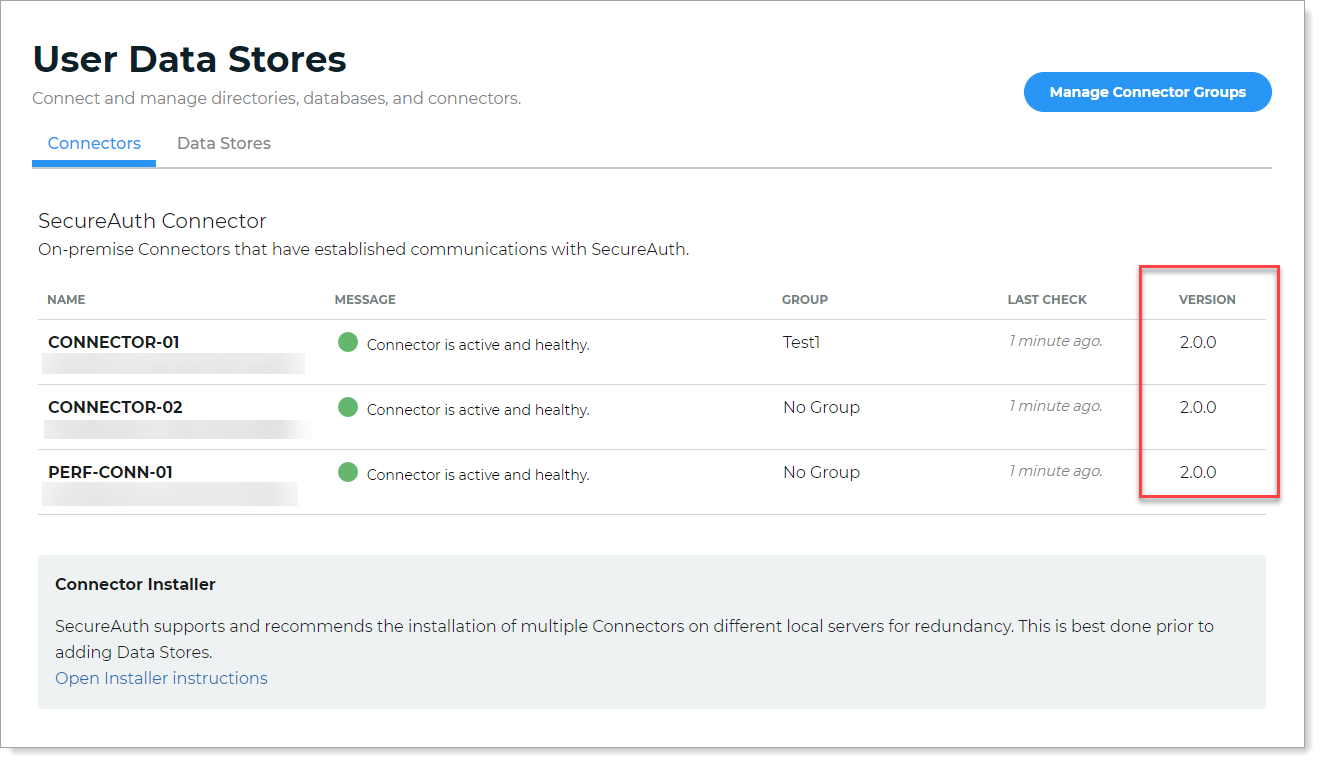
Updating the SecureAuth Connector
Note
You do not need to uninstall the SecureAuth Connector before updating.
Open the Identity Platform application.
On the left side of the Identity Platform page, click Data Stores.
The User Data Stores page opens.
Click the Open Installer instructions link.
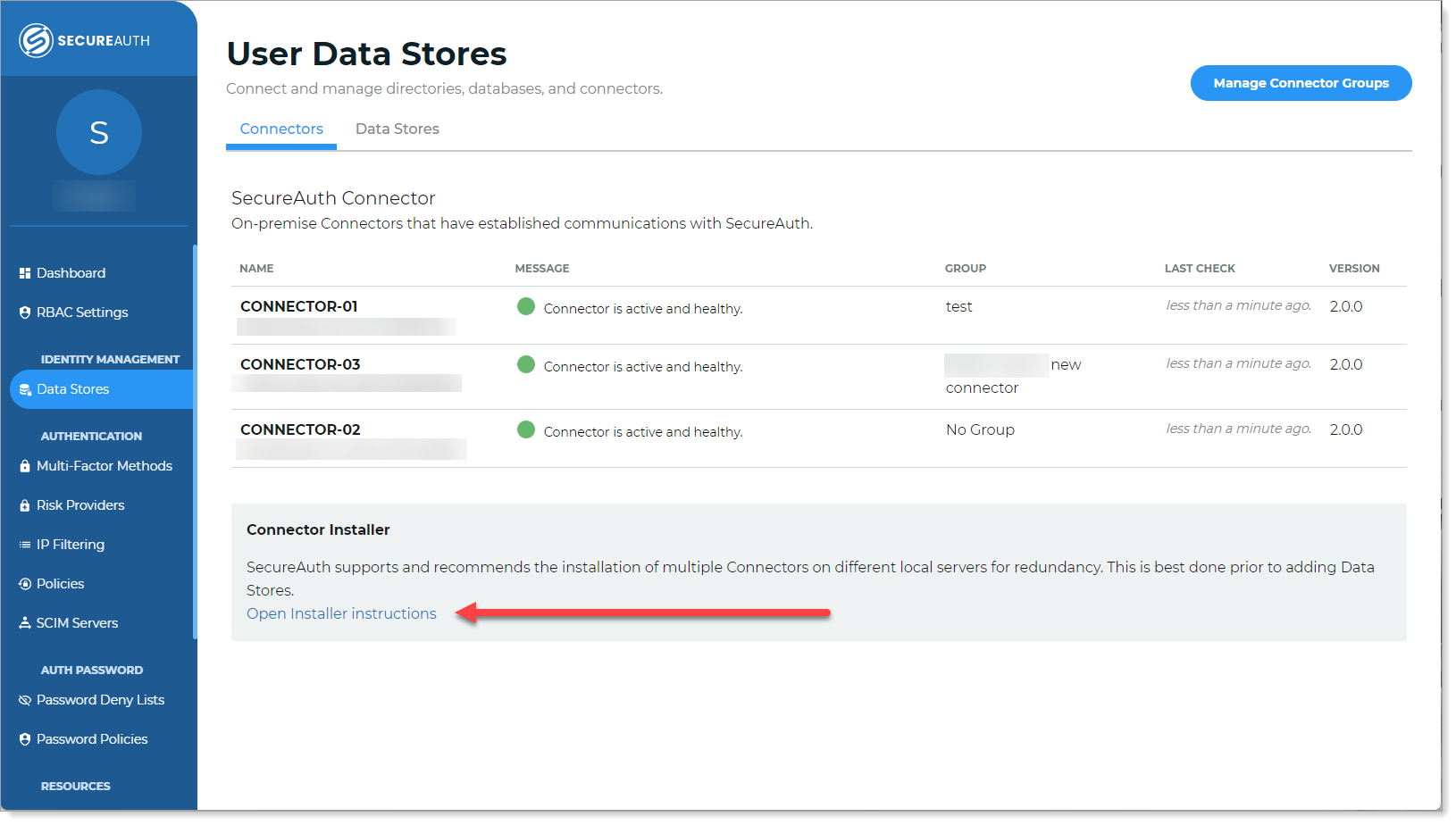
The Connector Installer page opens.
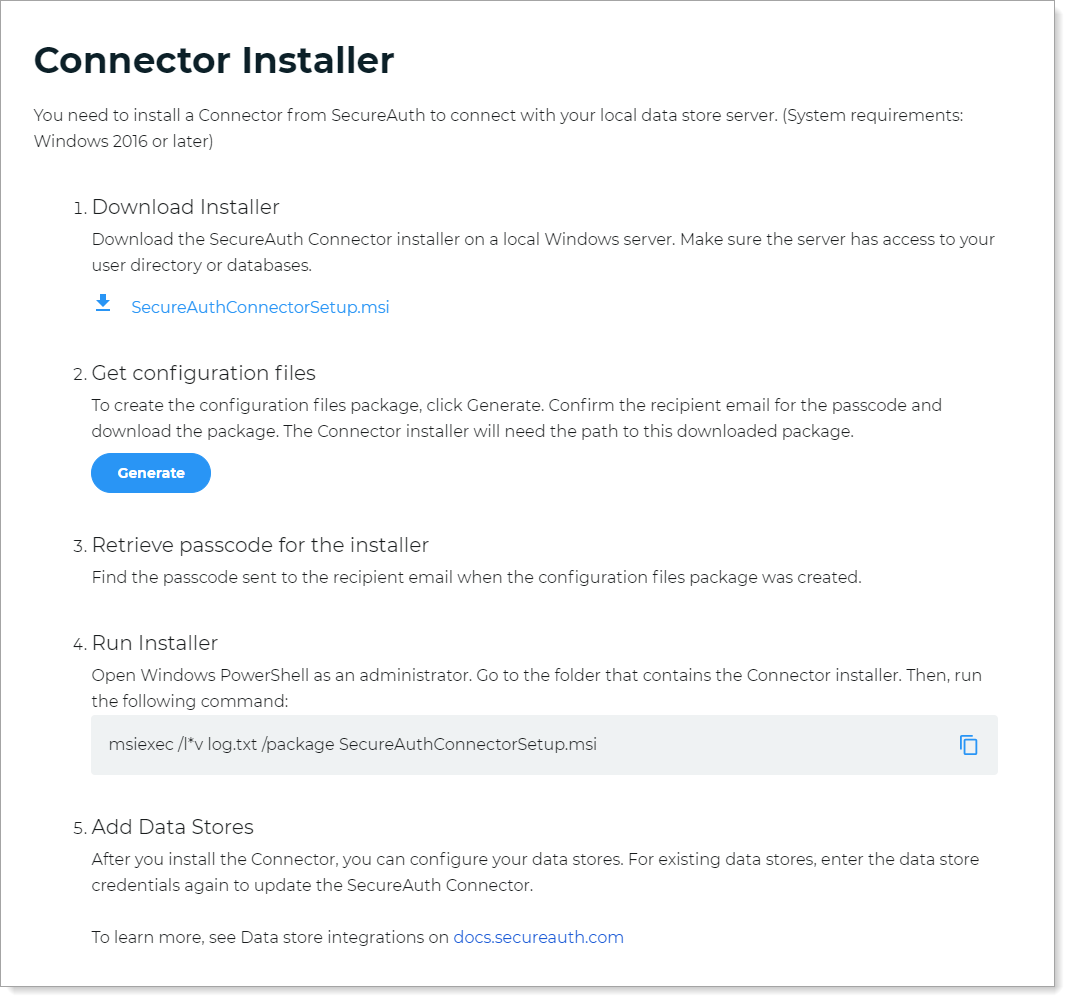
Click the .msi installer link.
The installer file is downloaded and saved to your machine.
Open Windows PowerShell with administrative privileges, go to the directory that contains the SecureAuth Connector installer. Then, run the following command:
msiexec /l*v log.txt /package SecureAuthConnectorSetup.msi
The installation process for the SecureAuth Connector opens.
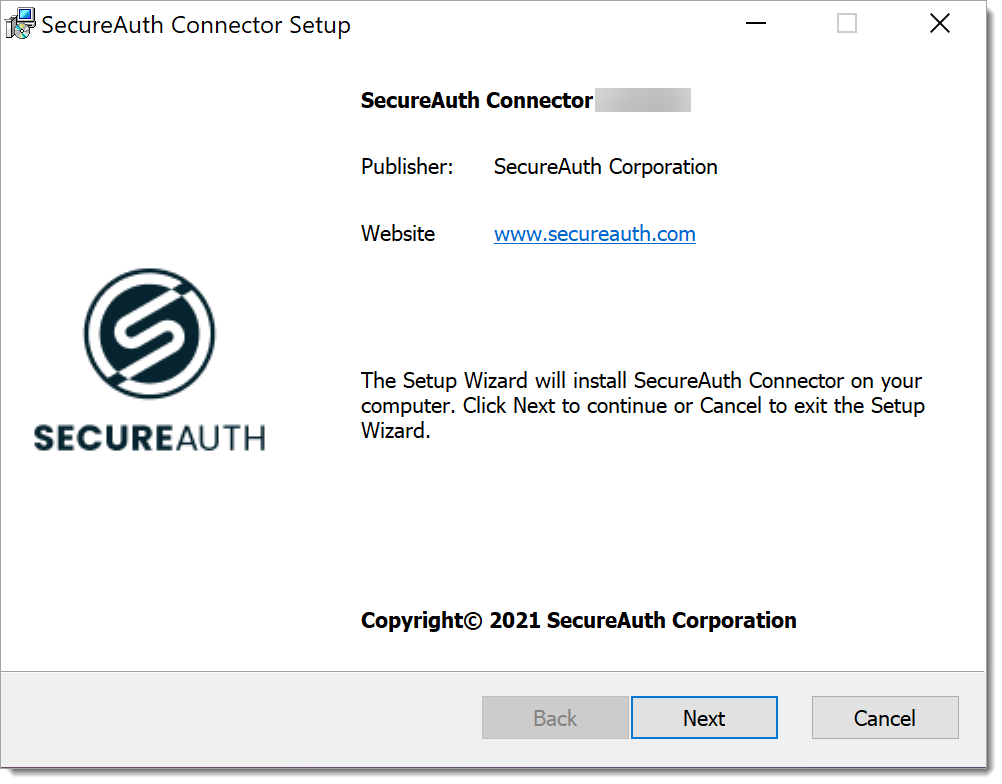
Follow the installation prompts to accept the license agreement and choose a destination folder.
On the Cache Configuration screen, select a caching mode for the connector service.
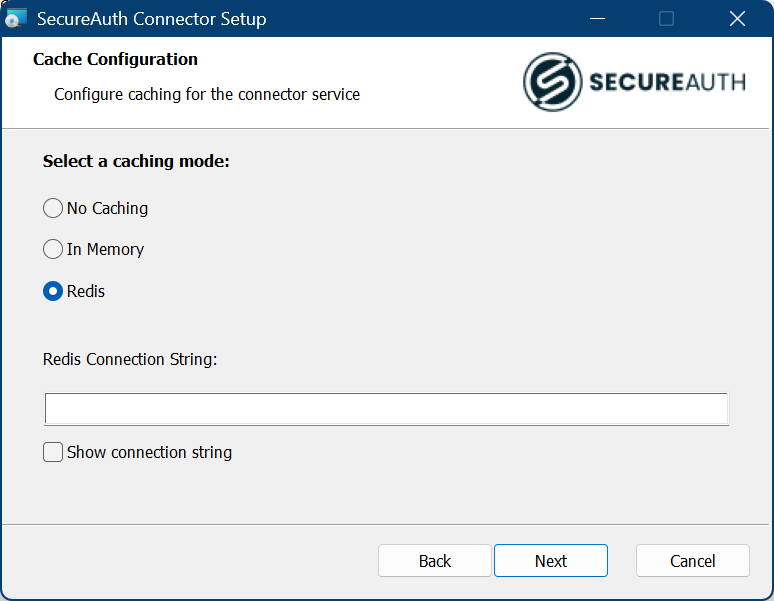
No Caching. The connector retrieves user data directly from the data store on every authentication request.
In Memory. The connector stores user data in memory for 30 minutes. The timeout resets each time the same user logs in. The connector only retrieves data from the data store for save operations like lock, unlock, or property updates. This is the default.
Redis. Works the same as In Memory, but stores the cache in a Redis instance. When you select this option, enter a value in the Redis Connection String field. Select the Show connection string checkbox to verify the value. The installer validates the connection before continuing.
Follow the remaining prompts to complete updating the SecureAuth Connector.